
Stewart County Criminal Court Cases
Stewart County belongs to Georgia's six-county Southwestern Judicial Circuit. The Stewart Superior Court clerk keeps felony and other general-jurisdiction files at 1764 Broad Street in Lumpkin. The published telephone number is 229-838-6769. Superior Court terms begin on the third Monday in March and September, yet a term date is not the same as a hearing date. Circuit calendar staff answer schedule questions at 229-928-4543, while the clerk supplies filed documents.
Magistrate Court may handle warrants, first-stage proceedings, and preliminary matters. Probate Court has limited statutory work. Lumpkin and Richland municipal channels keep their own traffic or ordinance matters. Stewart's inspected directory does not list a separate State Court, so do not assume all misdemeanors appear in one county docket. Ask which court accepted the filing and preserve the court name with the case number.
Stewart Court Channels Compared
Small-county routing matters because a search in the wrong system can return nothing even when a record exists. These are the research-supported starting points.
| Channel | Contact | Likely scope |
|---|---|---|
| Superior Court clerk | 1764 Broad St; 229-838-6769 | Felony and general-jurisdiction files |
| Magistrate Court | Courthouse ext. 601; 229-838-0505 | Warrants and preliminary stages |
| Lumpkin City Court | 229-838-4333 | Municipal citations and ordinance matters |
| Richland clerk | 229-887-3323 | Traffic and ordinance fallback |
A city citation may never create a Superior Court record. Conversely, a felony filed in Stewart Superior should not be sought only from the city clerk. Phone confirmation is especially useful before travel across Stewart County's 458.75 square miles.
Searching Stewart County Case Records
PeachCourt is the approved electronic provider listed for Stewart Superior Court. Its public gate shows Login, Register, Forgot Password, and support controls. It does not show open name, birth-date, or case-number fields before authentication. Account access and e-filing availability do not prove that every document is publicly viewable.
- Identify whether the matter belongs to Superior, Magistrate, Probate, Lumpkin, or Richland court.
- For a Stewart Superior file, register or sign in through PeachCourt and use the search controls available after authentication.
- Match the party and case carefully. Use a full name, filing year, and known case number when the authenticated interface permits them.
- Read the docket in date order and distinguish an entry from the underlying document.
- Ask the correct clerk for ordinary, certified, archived, or unavailable documents and confirm current charges.
| Visible gate control | Type | Access | Meaning |
|---|---|---|---|
| Login | Account control | Publicly visible | Starts authenticated access |
| Register | Account control | Publicly visible | Creates an account |
| Forgot Password | Support control | Publicly visible | Recovers credentials |
| Name or case search | Search fields | Not visible before login | Do not claim exact fields without an authenticated session |
PeachCourt Has Clear Limits
The Georgia court-record access directory identifies participating providers, but PeachCourt is not one statewide criminal database. The inspected listing covers Stewart Superior, not Stewart Magistrate, Probate, or either municipal court. Older paper records and sealed material may also fall outside an online display.
If a name search fails, confirm spelling, aliases, the filing year, and the actual court. Then call the clerk. Ask whether the matter is indexed under a warrant number, citation number, accusation, indictment, or another identifier. A portal failure and a no-record certification are not the same thing.
Access point: Georgia court records are generally open, but the originating court remains the best source for scope, certification, and current status.
Inside a Stewart County Case File
A docket is the chronological index of court activity. The file behind it may contain far more. Searchers often need the charging paper and final disposition, not merely the first arrest allegation.
| Case Number & Court | Identifies the tribunal and file; retain both when requesting copies. |
|---|---|
| Charging Document | May be an accusation, indictment, citation, or other filed charge. |
| Docket Entries | Chronological notices of filings, hearings, orders, and case events. |
| Hearing Dates | Scheduled events that may change; confirm with calendar staff. |
| Disposition & Judgment | Shows conviction, acquittal, dismissal, nolle prosequi, no bill, or another result. |
| Sentence & Conditions | Records punishment, supervision, credit, and court-ordered terms when public. |
Georgia's Uniform Superior Court Rules place no-bill lists in Minutes or Final Records. That detail matters when an online docket seems unresolved. A filed outcome supplies the context that an arrest announcement cannot.
Read Stewart Dispositions Carefully
Nolle prosequi means the prosecutor formally chose not to continue a charge at that point. A no bill means a grand jury did not return an indictment. An acquittal follows a finding of not guilty. A dismissal ends a charge through a court or prosecutorial action, while a conviction reflects guilt by plea or verdict.
- Arraignment
- The hearing at which the accused is formally called to answer filed charges.
- Docket
- The court's ordered list of filings and events, not always the full documents.
- Disposition
- The recorded outcome of a charge or case.
- Certified copy
- A clerk-authenticated copy used when official proof is needed.
One file can hold several charges with different results. Read each count separately. When Georgia Crime Information Center data lacks a final result, obtain a certified disposition from the clerk and follow the state's update process.
How a Criminal Case Moves
A Stewart County case may begin with an arrest, citation, or warrant. Magistrate Court commonly handles the first judicial stage. Prosecutors then decide whether and how to file. Felony cases proceed in Superior Court through arraignment, motions, a plea or trial, judgment, and possible appeal. Initial wording may change as facts are reviewed.
Case flow: Arrest › Booking › Charging decision › Arraignment › Motions › Plea or trial › Disposition › Sentence
The Southwestern Circuit publishes court calendars, but a calendar is a schedule rather than the official case file. Call the criminal calendar clerk for timing and the Stewart clerk for filed papers.
Stewart Copies and Transcripts
Local ordinary copy, certification, and search fees were not published in the inspected sources. Request a quote before ordering and state whether an emailed scan, plain paper copy, clerk-certified copy, or certified transcript is required. Ask about page charges, certification, research time, postage, and payment method separately.
Statewide court-reporter policy lists certified criminal transcript rates of $6 per page within 120 days, $5 afterward, $7.60 for a daily copy, $5.70 for an expedited copy, and $0.50 per nondigital exhibit page. Confirm the policy's current application with the reporter before relying on those figures. A clerk copy of an existing filing is not the same product as a reporter-prepared transcript.
The Stewart County public defender intake page provides English and Spanish applications for people seeking representation. It is not a docket search or a source of public case copies.
Case Record Access & Restrictions
Georgia's open-court tradition does not make every item unrestricted. Juvenile material, sealed records, protected victim information, personal identifiers, and some active investigative content may be hidden or redacted. Online access can show less than the courthouse file. Under the Georgia Open Records Act, an office may charge lawful search, retrieval, redaction, and copy costs.
Georgia record restriction under O.C.G.A. §35-3-37 limits eligible criminal-history dissemination. Court sealing may require a separate order. It does not mean that every source document vanishes. When a Stewart County case is absent, ask the clerk whether the file is in another court, archived, restricted, sealed, or indexed under a different identifier. Do not ask staff to disclose protected content.
Federal prosecutions from Stewart County belong to the U.S. District Court for the Middle District of Georgia and use PACER. PeachCourt does not cover them. The court of origin always controls.
Note: Verify the court, case number, and certified final disposition before drawing conclusions from a name match.
Stewart Court Access Screens
The official Stewart clerk page identifies the office that holds filed Superior Court records.
Its contact details are the sound starting point for a certified disposition or a file that is not visible online.
The PeachCourt access screen documents the account gate before search controls appear.

That screen supports a narrow claim of Stewart Superior participation, not a promise that every court or document is covered.
The Stewart public defender intake page shows the separate representation channel.
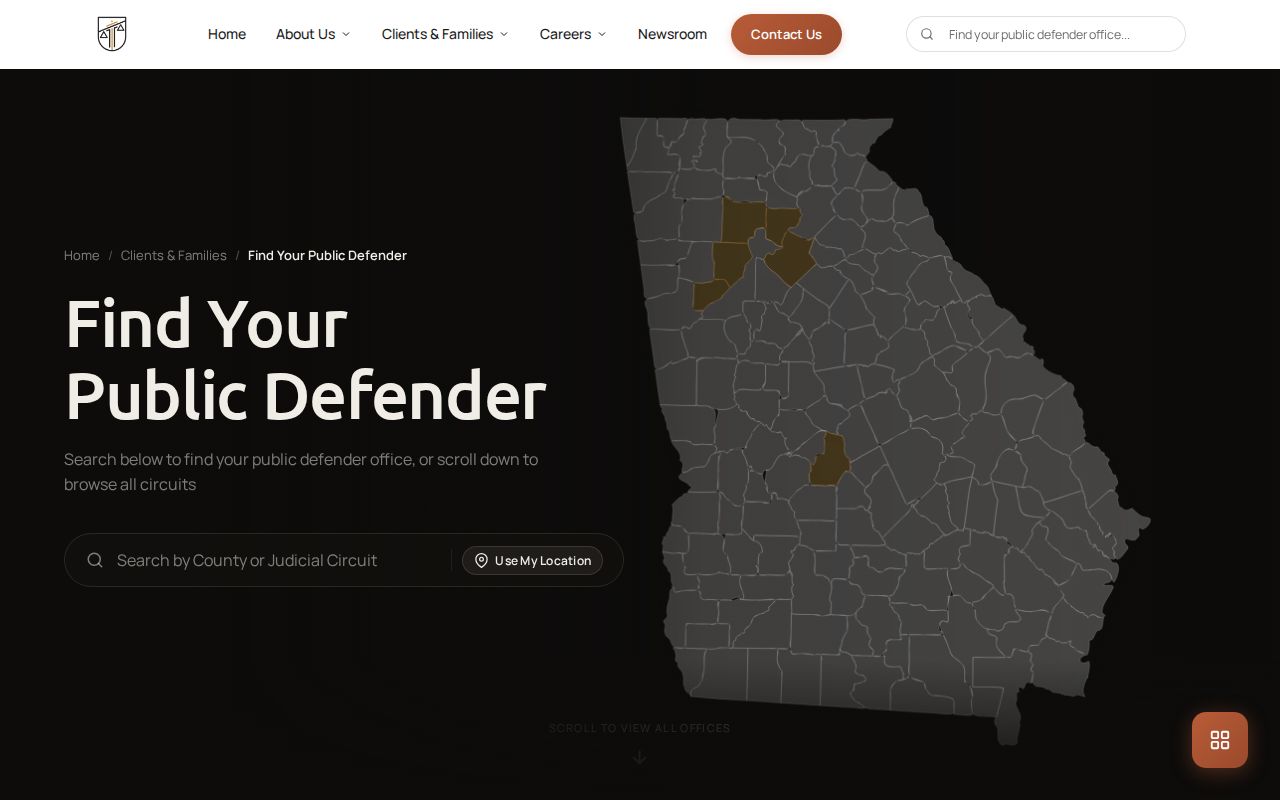
It offers application material but no public docket or record-copy service.