
Checking Lumpkin Criminal History
Lumpkin publishes no dedicated police records page, report form, blotter, app, or municipal case portal. The practical starting point is City Hall, which can route a request to police or the City Court clerk. The county courthouse and sheriff are separate custodians even though both serve people in Lumpkin.
Work through the record path in this order:
- Contact Lumpkin City Hall at 229-838-4333 and identify whether the request concerns a police incident report, citation, or City Court file.
- For a police narrative, ask for the official custodian and current request steps. Give the date, place, involved names, and report number if known.
- For a municipal citation, court date, disposition, or bench-warrant question, ask for the City Court clerk rather than treating the payment link as a docket search.
- For local custody, call the Stewart County Sheriff. For a filed felony, contact the Superior Court clerk or use PeachCourt within its limits.
- For a state record, use the limited Georgia Felon Search or request a fingerprint-based personal record review from the Georgia Bureau of Investigation.
Lumpkin City Hall Routes Records
Lumpkin’s official government gateway is the city-level entrance for local contacts and services.
City Hall sits at 552 MLK Jr. Drive, P.O. Box 278, Lumpkin, GA 31815. Call 229-838-4333 and name the target office and record. A police report belongs on the police side; a citation or municipal disposition belongs with City Court. No published source promises immediate counter access, a set fee, or electronic delivery, so confirm each term before relying on it.
Lumpkin City Hall
552 MLK Jr. Drive
P.O. Box 278
Lumpkin, GA 31815
229-838-4333
Lumpkin Police Department Records
The city employee directory identifies the police chief and City Court clerk, confirming separate police and court functions.

The city does not publish a stand-alone police records desk, email address, counter hours, request form, fee, or report portal. Ask City Hall to route a request to the police records custodian. State that the goal is the incident narrative rather than a criminal-history summary. The authoring officer or agency remains central when a report needs review or correction.
If a report appears wrong, identify the disputed field and ask for the agency’s review process. A clerk cannot rewrite an officer’s narrative merely because the same event later reached City Court. Likewise, a later dismissal does not erase the original report. Keep the final disposition with the report so the two records show both the initial account and the legal outcome.
If Lumpkin Police, the sheriff, and a state agency all joined an investigation, each may retain its own material. The GBI’s 2024 cooperation notice confirms that such joint work occurs, but it does not create one merged public file.
Use Lumpkin’s Form for Routing
The Lumpkin contact form displays required fields for name and email, plus subject and message fields.
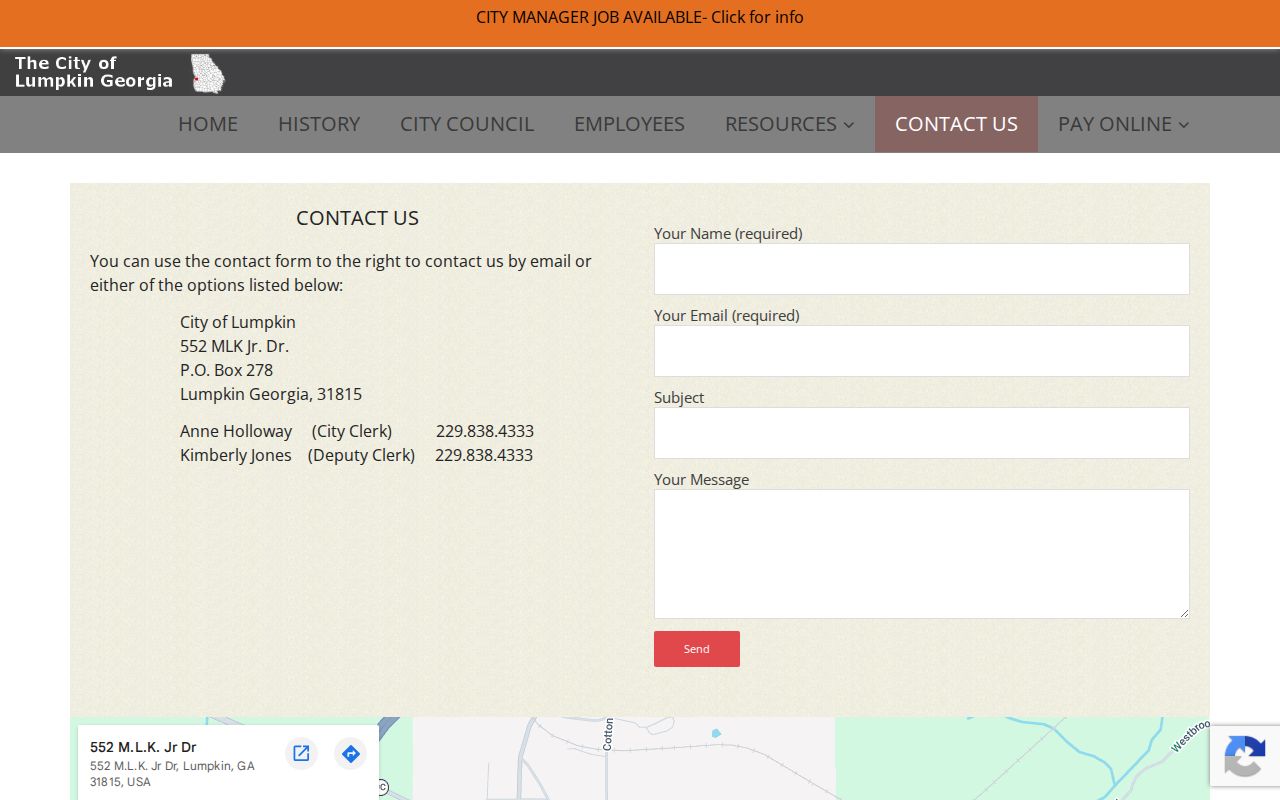
That general form is useful for asking where to send a request. It does not prove identity, consent, or a legal right to a report. A focused message can ask for “the official custodian and request procedure for a Lumpkin Police incident report dated [date].” Avoid placing unnecessary sensitive identifiers in the message. If staff requires a different form, identification, payment, or pickup, obtain those instructions directly.
No city rule in the research guarantees that the finished record will arrive through the web form. Treat the response as routing until the custodian confirms otherwise.
Lumpkin Arrests and Bookings
A citation can remain a city case without a jail booking. When an arrest involves custody, identify the arresting agency and check booking status with the Stewart County Sheriff at 229-838-4311. The sheriff does not publish a verified online roster. If felony charges are later filed, the formal case belongs with Stewart Superior Court.
Keep the police report, booking entry, municipal file, and felony docket distinct. A booking charge records the intake stage and may change after a prosecutor reviews the case. The court’s final disposition, meaning the formal outcome, is the right source for whether a charge ended in conviction, dismissal, nolle prosequi, or another result.
Lumpkin’s ICE Facility Is Different
Stewart Detention Center has a Lumpkin address, but it is a private federal immigration contract facility. It is not the ordinary city booking jail and should not be used as the default source for a Lumpkin Police arrest. Geographic closeness does not give it custody of municipal or county criminal records.
| Facility or office | System | Record sought |
|---|---|---|
| Lumpkin City Hall or Police | City | Police narrative or municipal routing |
| Stewart County Sheriff | County criminal justice | Local booking or custody confirmation |
| Stewart Superior Court | County court | Filed felony case and disposition |
| Stewart Detention Center | Federal immigration detention | Immigration custody through federal channels |
Using the federal facility for a routine city booking request sends the search into the wrong legal system. Start with the sheriff when the question is local criminal custody.
Municipal Court Records in Lumpkin
Lumpkin City Court handles municipal citation matters through the city clerk. No online docket, current judge, published calendar, or city copy-fee schedule was found. A 1999 Department of Community Affairs agreement stated that the municipal court met once monthly. That document is historical and does not establish a 2026 session date. Call City Hall to confirm the current calendar, clerk access, appearance method, and document terms.
| Court Name | Lumpkin City Court, routed through City Hall and the municipal clerk |
|---|---|
| Case Types Heard | Traffic, ordinance, and other city citation matters within municipal authority |
| Case Lookup Channel | City Court clerk through 229-838-4333; no public case portal was identified |
| What the Docket Shows | Ask for charge or citation, scheduled events, orders, payment status, process, and disposition |
| Copies & Fees | Not published; request current search, copy, certification, mailing, and delivery prices |
A municipal bench warrant may not appear in a Stewart Superior search. For a failure-to-appear or unresolved city citation, contact the City Court clerk directly.
Lumpkin Ticket Payment Is Not Search
The city links to an online Lumpkin ticket-payment interface.
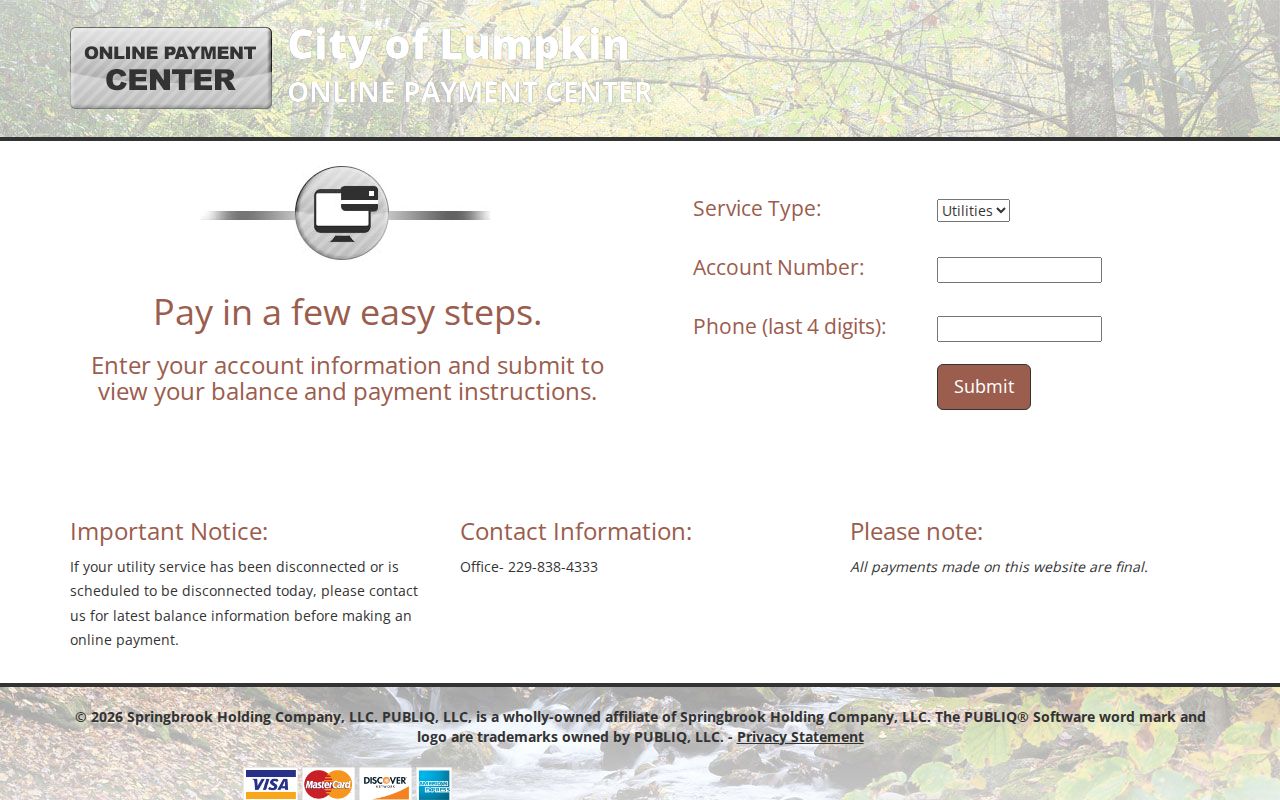
A payment tool is not a municipal case lookup. A receipt may help show payment, but it is not the complete docket, charge, warrant status, court order, or certified disposition. Ask the clerk for those products and for confirmation that any appearance or payment issue has been resolved.
Do not infer that a citation is closed solely because a payment screen accepted information. Court status belongs with the city clerk, and a broader felony file belongs with the Superior Court clerk.
Where Lumpkin Records Go
A Lumpkin enforcement event can create several records at different times. Police keeps its report. The sheriff handles county custody. City Court keeps a local citation matter, while felony prosecution moves to Stewart Superior Court. Courts and agencies then send qualifying information to the Georgia Crime Information Center.
Timing affects what each office can confirm. Police may have the first narrative while a booking is still being processed. The sheriff may confirm custody before a prosecutor files a court charge. A court disposition can take much longer to reach GCIC. When records disagree, compare their dates and stages before treating one as an error.
Record flow: Lumpkin Police › Stewart County Courts › Georgia Crime Information Center
That line is a broad path, not proof that every incident reaches every stage. A citation may never create a booking. An arrest may not lead to a filed charge. The Georgia Felon Search is only a public felony-conviction extract, excludes misdemeanors and restricted matters, and is not fingerprint confirmation. Use Stewart County criminal court cases for the filed county docket and Stewart arrest lookup for local custody channels.
Lumpkin Courthouse Records Through Time
Lumpkin is the county seat, and that makes the courthouse part of the city’s records landscape without turning county files into City Hall records. The prior courthouse burned in 1922, and the present courthouse was rebuilt in 1923. Older criminal and legal papers may therefore have different storage histories from modern electronic dockets.
The courthouse stands at 1764 Broad Street and houses Superior Court clerk staff along with other county court functions. Published county pages list both a main switchboard and older direct numbers, so the switchboard is the sound first call. Ask staff to identify the correct court before requesting a search because Magistrate, Probate, Superior, and municipal records do not share one counter or jurisdiction.
For genealogy or an old proceeding, give the Superior Court clerk an approximate year, party name, court, and record type. Ask about minutes, final records, dockets, archived paper, or material that may be unavailable. Nothing in the official research establishes one universal start year for PeachCourt coverage.
Note: Begin courthouse calls with the main switchboard at 229-838-6769 because official pages publish conflicting legacy direct numbers.
Lumpkin’s Four Record Systems
The city’s small footprint places four systems near one another: municipal government, Stewart County courts, county sheriff operations, and federal immigration detention. Their addresses do not make their records interchangeable. A clear request names both the event and the system.
- Police report
- The narrative and supplements created by the officer’s agency.
- Booking record
- Custody-focused intake information held by the sheriff for local criminal detention.
- Case file
- The court docket, filed charges, orders, and disposition kept by the correct clerk.
- GCIC history
- The state repository record built from agency fingerprints and later disposition reporting.
For a self-review, compare the final court disposition with the state history. If a GCIC entry lacks an outcome, obtain the disposition from the clerk and follow the official correction procedure.
Verify Lumpkin Record Data
No defensible official annual Lumpkin offense series was captured. Missing reporting cannot be presented as zero. Any FBI Crime Data Explorer or Georgia UCR figure must identify the agency and year and account for month coverage. A county total is not a Lumpkin city total.
The Georgia DCA material citing the 2020 Census gives Lumpkin a population of 891. That figure controls over a stale number embedded on a city history page. The conflict is a useful records lesson: even an official government website can carry old third-party data, so check the underlying source and date before drawing a conclusion.
The same rule applies to a search result. Record age, agency coverage, spelling, and later corrections all shape what appears. A result should be tied to the source that produced it and verified with the originating office when the outcome matters.
Public Access Rules in Lumpkin
Georgia’s Open Records Act covers nonexempt city records and generally requires an agency response within three business days, or an explanation of the timetable, cost, or exemption. Police and court custodians may redact protected personal details or withhold active-investigation, juvenile, sealed, and other exempt material. A request should be narrow enough to identify the record without demanding facts that are not needed.
Repository access follows different law. Georgia permits public access to qualifying felony-conviction information through a name and demographic search. Broader history about another person generally requires signed prescribed consent. Court access and GCIC dissemination are not the same, and neither a name match nor an arrest proves identity or guilt.
Key Statutes:
Georgia Open Records Act, O.C.G.A. §§50-18-70 through 50-18-77 - provides access to nonexempt public records and sets response duties.
O.C.G.A. §35-3-34 - controls public felony-conviction access and consent-based dissemination.
O.C.G.A. §35-3-37 - addresses record restriction and specified conviction relief.