
Sex Offender Checks in Stewart County
The Georgia Bureau of Investigation, or GBI, maintains the central registry under O.C.G.A. §42-1-12. County sheriffs register people, verify required information, and send updates to GBI. For Stewart County, begin with the state portal filtered to the county. If it fails, contact the Sheriff and inspect the county list through an authorized public location.
Georgia law calls for county lists to be available for inspection at the sheriff, county administration, municipal administration, Superior Court clerk, and sheriff website locations. That rule creates an offline fallback even though Stewart County does not publish a separate local map, notification app, or dedicated registry page.
The Registry Conditions Gate
The Georgia Sex Offender Registry opens with “I agree” and “I do not agree” controls. Search fields are available only after the user accepts the conditions. Read them. GBI explains that information comes from other agencies, changes often, and is not guaranteed to be complete or accurate.
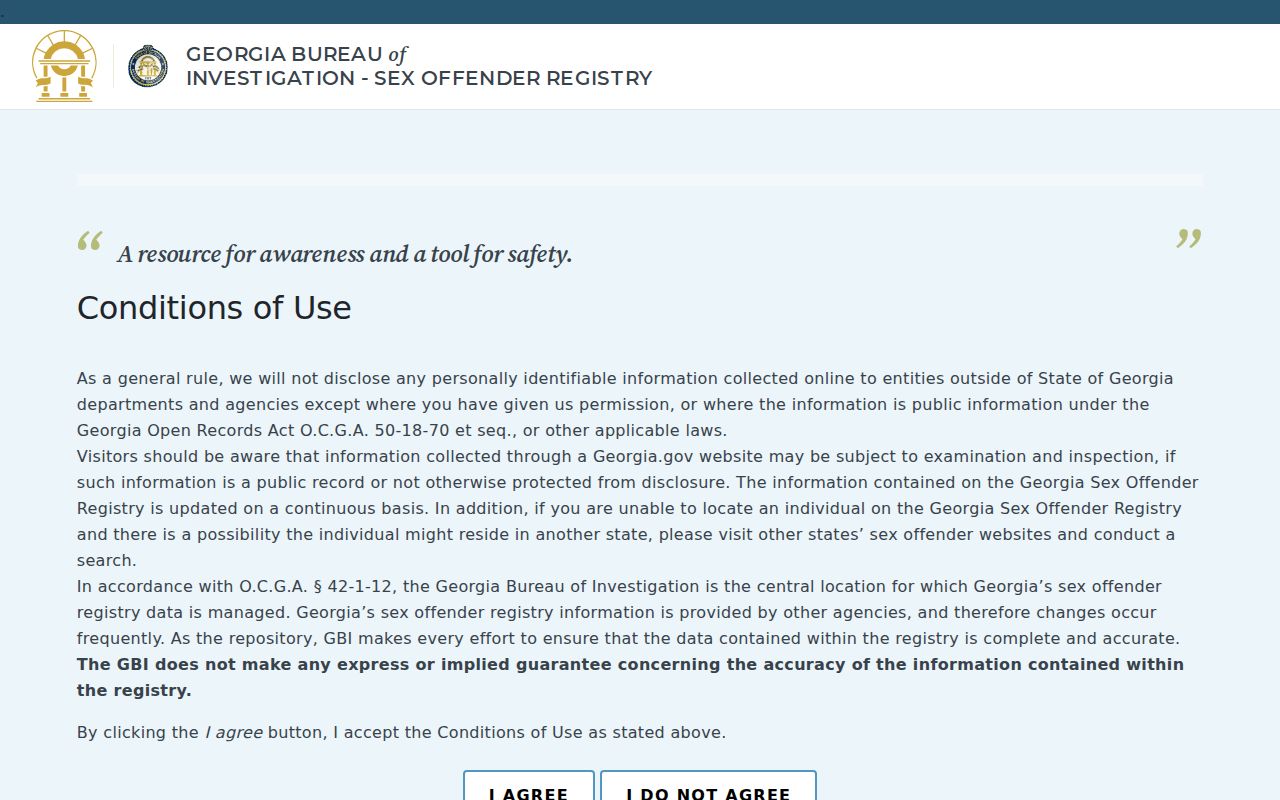 The captured official search page shows why conditions must be accepted before a Stewart County query begins.
Match with care: Compare the photograph, aliases, physical details, address, offense, and registration status rather than relying on a shared name.
How to Search the Georgia Sex Offender Registry
The GBI's registry service page leads to the public portal and explains the official state role.
- Open the GBI registry and read the conditions of use. Select “I agree” to proceed.
- Choose Stewart in the County field for a county-wide view, or use a name, city, ZIP, street, or address-based filter.
- Narrow only when useful. Race, sex or gender, offense, and offender or risk type can reduce results.
- Open a possible match and compare the full profile. Confirm questions with the Sheriff or GBI.
| Field | Type | Required | Use |
|---|---|---|---|
| First/last name | Text | No | Person search |
| County | Dropdown | No | Select Stewart |
| City/ZIP | Text or selection | No | Geographic narrowing |
| Street/address | Text | Conditional | Proximity search |
| Radius/miles | Dropdown | Conditional | Available in accepted session |
| Race; sex/gender | Dropdown | No | Person filters |
| Offense; risk type | Selection | No | Status and offense filters |
GBI and NSOPW Serve Different Needs
The Georgia portal is the primary state source and supports Stewart County filtering. The Dru Sjodin National Sex Offender Public Website, or NSOPW, searches participating jurisdictions across the country. Use it when a person may have ties beyond Georgia or when a wider geographic check is needed.
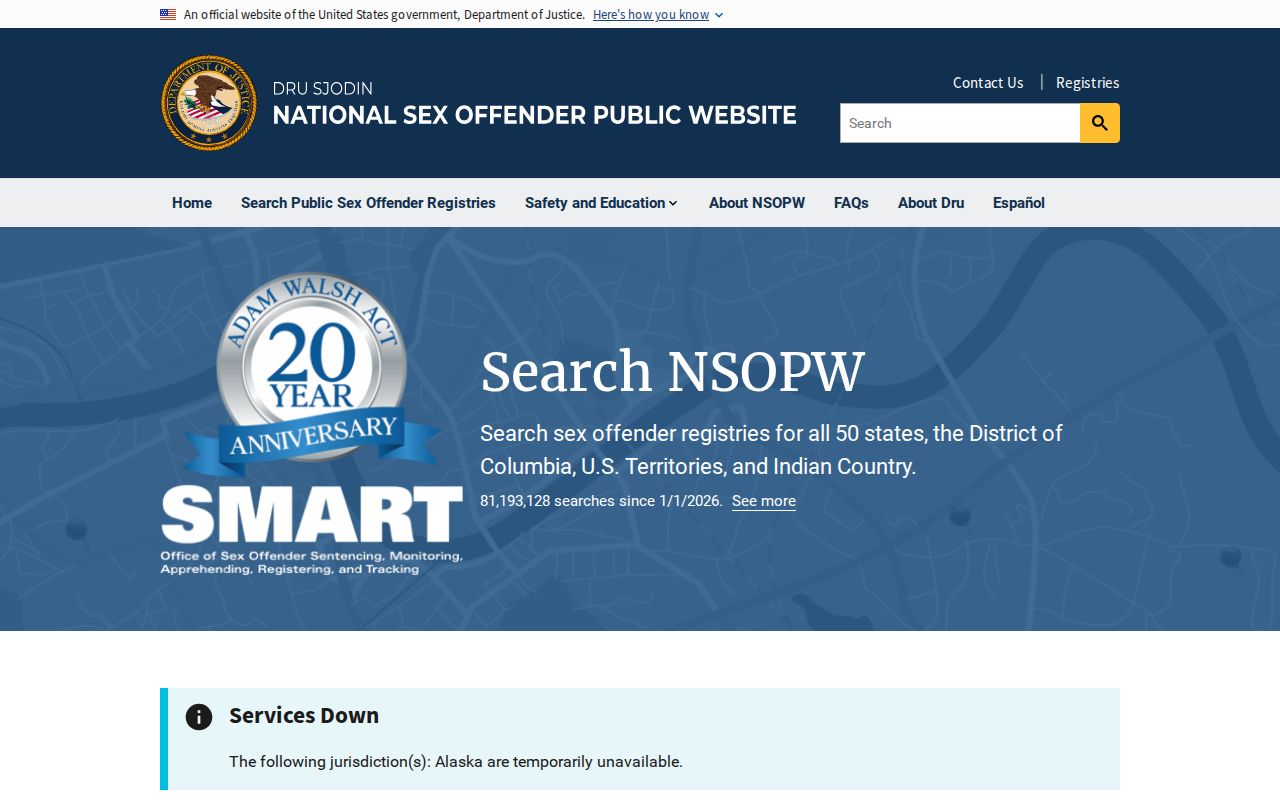 A national result is a second layer, not a substitute for the current Georgia profile and Stewart Sheriff verification.
| Question | GBI registry | NSOPW |
|---|---|---|
| County filter | Direct Stewart selection | Broader participating search |
| Source context | Georgia state repository | Participating jurisdictions |
| Local verification | Confirm with Stewart Sheriff | Return to the listed jurisdiction |
Inside a Registry Profile
A typical public profile combines identity, location, offense, and compliance information. Some fields can be stale or incomplete while an agency processes a change.
| Name & Aliases | Legal name and known alternate names used for matching. |
|---|---|
| Photo & Description | Photograph, age, sex, race, height, weight, and other physical details when published. |
| Registered Address | Current or last-known residence and county information. |
| Offense | Offense description, conviction date, and jurisdiction. |
| Risk Classification | Georgia's Level I, Level II, or Sexually Dangerous Predator designation. |
| Registration Status | Compliance or absconder information and verification details when displayed. |
An address is not proof that a person is present at a given moment. Nor does a listed offense describe every fact in the court case. Use the originating court for the judgment and law enforcement for suspected noncompliance.
Stewart Sheriff Verification Role
Registration occurs in person with the county sheriff. Georgia generally requires action within 72 hours after release, placement on supervision, or entry into the state. Annual renewal occurs within the 72 hours before the registrant's birthday and includes a photo and fingerprints. Many changes also must be reported within 72 hours.
The sheriff forwards registration to GBI within 72 hours and electronic updates within two business days. These overlapping windows explain why a recent move may not appear at once. Call the Stewart County Sheriff at 229-838-4311 or 229-838-4393 for the appropriate local registry contact, current office procedure, and lawful inspection route. Do not assume the general records counter can answer every compliance question.
Georgia Registration Levels and Requirements
Georgia uses risk classifications, not the federal tier-duration labels used in some states. Registration is generally for life, excluding time incarcerated, although O.C.G.A. §42-1-19 provides court-petition release routes for qualifying people. Classification affects risk assessment and some review options.
| Georgia category | General meaning | Key consequence |
|---|---|---|
| Level I | Assessed lower likelihood | May support a statutory release petition |
| Level II | Higher assessed risk | Time-limited reevaluation and judicial-review process |
| Sexually Dangerous Predator | Highest designation | Lifetime GPS and added verification |
The classification is not a simple label for how serious a reader believes an offense to be. It comes from Georgia's statutory assessment system. The GBI registry FAQ supplies official explanations.
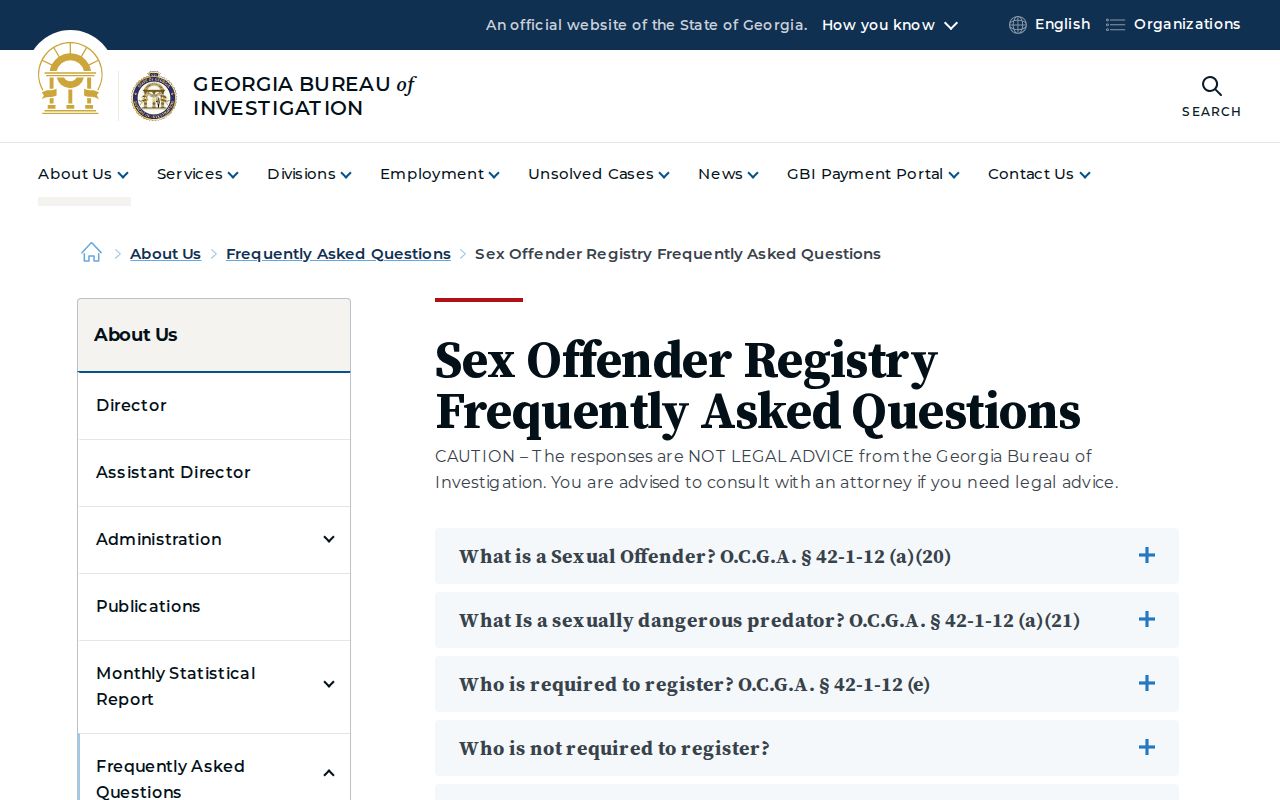 The GBI FAQ is the proper place to confirm current statewide duties before relying on a summary.
The Stewart Address Rule
For qualifying conduct after July 1, 2008, O.C.G.A. §42-1-15 can impose a 1,000-foot residence restriction tied to places named in the statute. Do not draw a circle on a map and make an independent legal judgment. Dates, statutory definitions, measurement rules, and the person's legal status matter.
A registry map is an awareness tool, not a land-use ruling. Questions about compliance should go to the Sheriff or the proper state authority. Questions about a specific order belong with the court record or counsel. The lack of a map pin does not prove that an address is lawful or unlawful.
Absconder and Error Follow-Up
An absconder status or suspected unreported move should be sent through GBI's official tip route or the Stewart Sheriff. Emergencies go to 911. Do not investigate at the address, confront anyone, or publish private claims.
If a profile seems wrong, record the profile identifier, field at issue, and date viewed. Contact the maintaining agency. A court disposition may help correct an offense entry, while the Sheriff is the logical source for a recent Stewart address or verification update. Allow for agency processing time.
Note: Save the date of any registry check because profiles and compliance status can change.
Community Notification and Lawful Use
Registry information supports personal and family safety, neighborhood awareness, and informed contact with law enforcement. It is not a verdict about present conduct. Georgia and federal public portals also warn users about misuse.
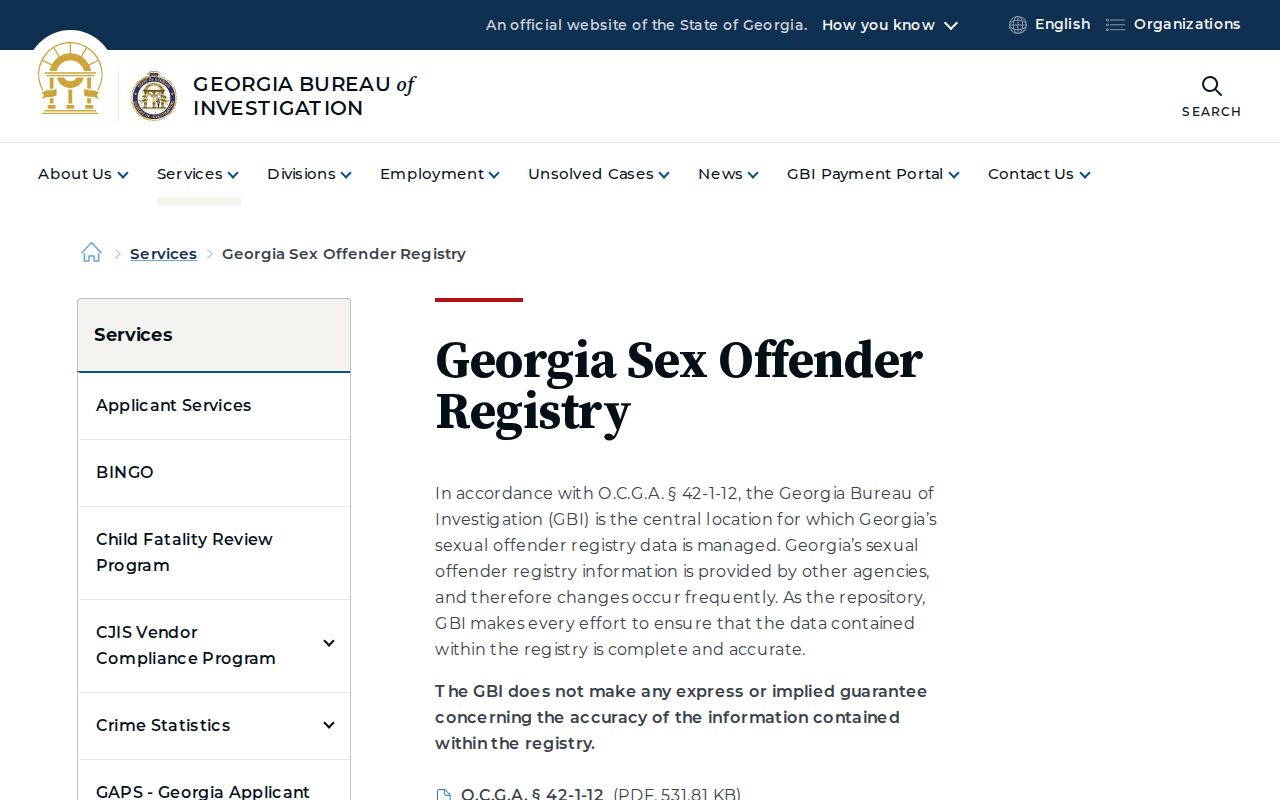 The official GBI gateway keeps the search, state guidance, and reporting channels tied to their lawful public-safety purpose.
Do not misuse registry data: Never harass, threaten, intimidate, punish, or take vigilante action against a registrant, family member, household, property owner, or neighbor.
Use the Sheriff and GBI for suspected violations. Verify a profile before relying on it, and treat every person at an address lawfully. Registry access is a public-safety resource, not permission for discrimination or private enforcement.
Stewart Searches Need Dates
Registry results are snapshots. Record the day and time of a Stewart County search, especially when checking a recent move or status change. The Sheriff may have received an in-person update that is still moving to GBI, while the national portal may update on a different cycle. None of those delays should be treated as proof of misconduct.
For historical understanding, the criminal court judgment explains the conviction and sentence, while the registry profile explains present registration data. They are related but distinct public records. Use the Stewart Superior clerk for a local felony judgment, the originating out-of-county court for another case, and the registry agency for current compliance fields. This separation keeps an old case fact from being mistaken for a current address fact.