
Checking Richland Criminal History
A useful Richland criminal records search begins by naming the document. The city has no published all-purpose police portal, blotter, records form, or municipal case search. A report written by a Richland officer therefore has a different route from a traffic citation. Likewise, neither city office is the final custodian for a Stewart County felony case or a current county booking.
Use the following order to keep the request with the right custodian:
- Call Richland Police at 229-887-3530 for an incident or arrest report created by a city officer. Give the approximate date, location, names, and report number if known.
- Ask what written request, identification, fee, or pickup method applies. The city has not published those terms online, so do not assume email delivery.
- Call the Richland clerk at 229-887-3323 for a city citation, municipal court date, disposition, payment status, ordinance, or related legal paper.
- For custody or booking, contact the Stewart County Sheriff. For a filed felony, use the Superior Court clerk or PeachCourt.
- For the state layer, use the Georgia Felon Search for its limited public conviction product or request a fingerprint-based personal review through the Georgia Bureau of Investigation.
Richland Police or Clerk?
Two Richland phone lines serve distinct jobs. Police nonemergency is the first stop for the narrative written by an officer. The clerk is the better starting point for a citation, municipal case, city minutes, codes, ordinances, and resolutions. Calling the clerk for a police narrative may add a transfer, while asking police for a certified municipal disposition sends the request to an office that may not hold it.
Before calling, write down the event date, place, name spelling, and the kind of proof needed. A request for “everything” can blur several record systems. A request for a Richland Police incident report from a stated date gives staff a far better lead. If the aim is to learn how a city charge ended, ask the clerk for the docket and final disposition instead. For present custody, ask the sheriff for a booking confirmation. This simple sorting step also makes it easier to spot a mismatch between a report number and a court case number.
| Richland channel | Best request | Published contact |
|---|---|---|
| Police | City-authored incident or arrest report | 229-887-3530 |
| City clerk | Citation, municipal file, court date, city legal paper | 229-887-3323 |
| Stewart Sheriff | County custody or booking confirmation | 229-838-4311 |
| Superior Court clerk | Filed felony docket and disposition | 229-838-6769 |
The official Richland services page shows the police contact that anchors the first route.
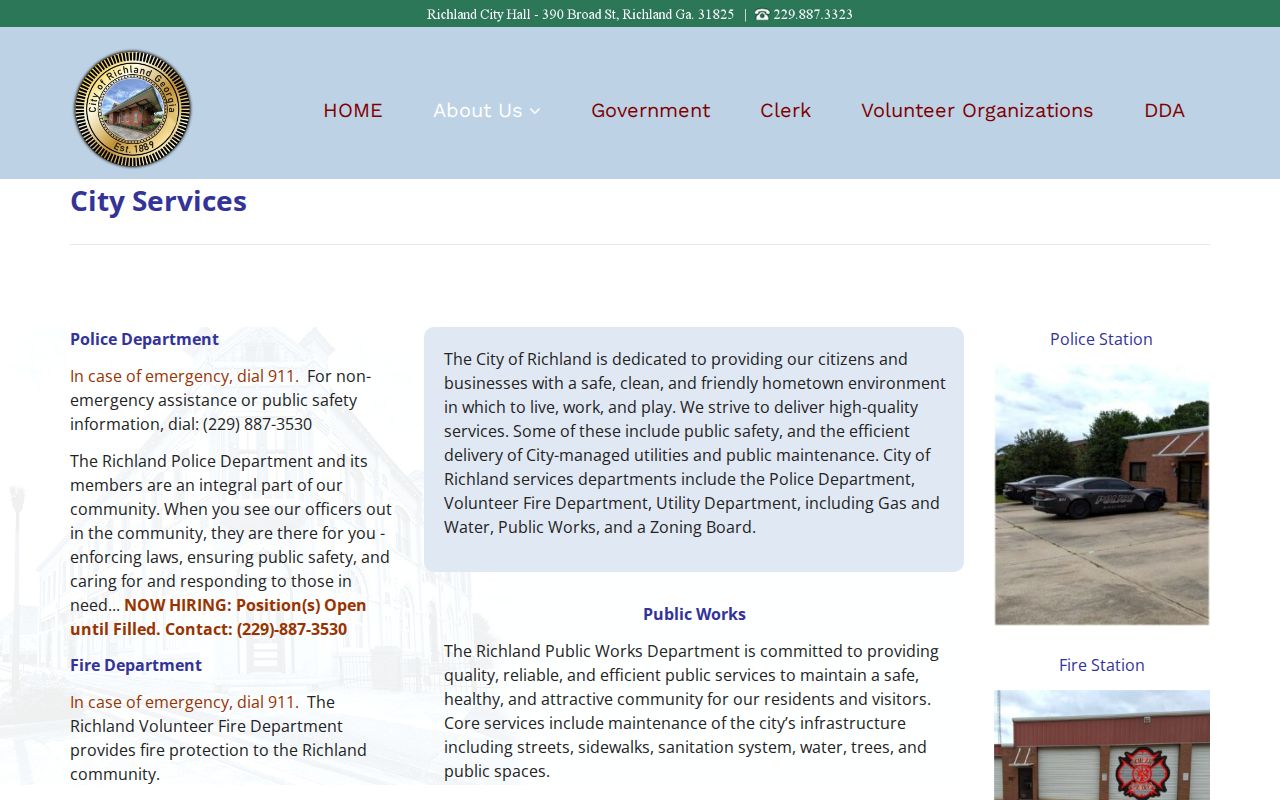
That source confirms a local police channel, but it does not create an online report database or publish records-counter terms.
Richland Police Department Records
Richland Police is the authoring custodian when its officer creates an incident report. Call the nonemergency number and describe the precise record sought. Useful facts include an incident date range, street or location, involved name, and any report number. Ask which office receives an Open Records Act request and whether the city requires identification or redaction review. No official source publishes a dedicated records-unit name, email, hours, copy fee, request form, mobile app, or online report portal.
Agency authorship matters when several departments assist. A county deputy, state agent, or Richland officer may keep a separate file from the same event. Cooperation does not merge those narratives into a common Stewart database. Request each needed report from the agency that made it, and keep the report identifier apart from any later booking or court number.
Note: Emergency matters belong with 911; the published police number is for nonemergency routing and record questions.
Richland Citation Payment Limits
The city clerk’s official citation instructions allow payment as directed on the citation, by mail, by phone, or at the counter. The office states that it does not accept cash.
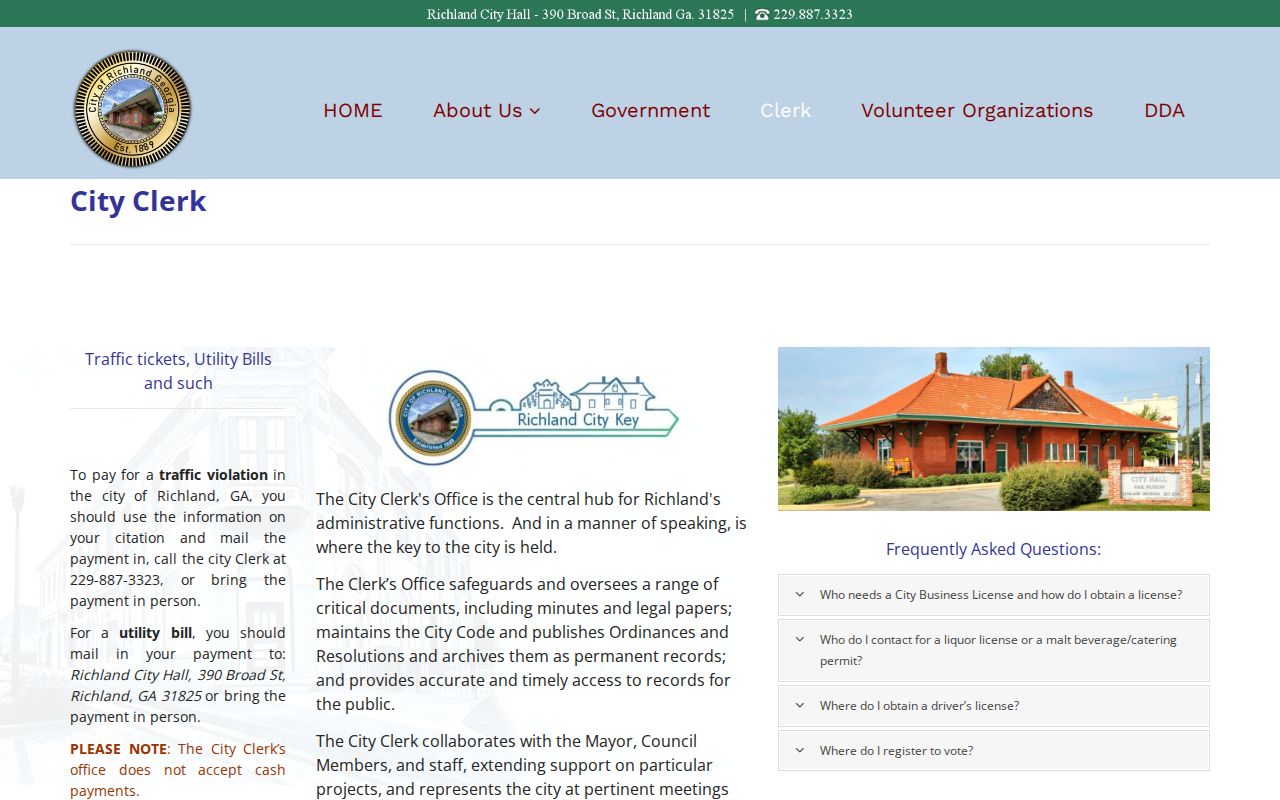
The page helps with payment, yet payment is not a Richland criminal case search. A receipt may show that money was processed. It does not necessarily provide the charging paper, docket history, court order, warrant status, or certified final disposition. Ask the clerk for the municipal file and current copy or certification charge as a separate request.
If paying at the Richland counter, bring a payment method the clerk accepts and keep the receipt. The no-cash statement belongs to the published traffic-payment process. It should not be stretched into a claim about every city fee because no broader fee schedule was located.
Richland Arrests and Bookings
No official Richland holding-facility page or city booking roster was found. Some police encounters end with a citation and remain in municipal court, so they may never produce a jail entry. When a Richland arrest involves custody, call the Stewart County Sheriff at 229-838-4311 to ask about intake or release. The sheriff publishes no verified public roster, so phone and records-request routes matter.
Preserve four identifiers if they exist: the police report number, booking identifier, municipal citation or case number, and final court disposition. They describe different stages. The first booking charge can also differ from the accusation or indictment filed later. An arrest shows an enforcement event based on probable cause; it does not prove guilt.
Trace a Richland Arrest
A Richland arrest can split into several records. The officer’s narrative stays with police. County custody information belongs with the sheriff. A city ordinance or traffic matter may remain with the municipal clerk, while a felony charge proceeds to Stewart Superior Court. Georgia’s repository receives fingerprints and disposition reports through later agency submissions.
Local timeline: Richland Police action › possible Stewart Sheriff booking › municipal or county charging decision › court disposition › GCIC update.
Recent events may appear in one office before another. For the newest information, begin with the authoring agency and custody office. For the formal outcome, return to the court file. If the Superior Court docket is needed, Stewart County criminal court cases explains the county-level route without treating PeachCourt as a complete search of municipal matters.
Municipal Court Records in Richland
Richland’s municipal channel covers city citations and ordinance or traffic matters routed through the clerk. The city does not publish a searchable docket, current judge, court calendar, copy fee, or certified-copy procedure. A 1999 Georgia Department of Community Affairs service agreement recorded a once-monthly municipal court funded by the city. That is historical evidence, not a current session schedule. Confirm the next date, appearance method, and clerk hours by phone.
| Court Name | Richland municipal court, routed through the city clerk |
|---|---|
| Case Types Heard | City ordinance, traffic, and other municipal citation matters within local jurisdiction |
| Case Lookup Channel | Clerk at 390 Broad Street or 229-887-3323; no online docket was found |
| What the Docket Shows | Ask for citation, events, court dates, orders, payment status, and disposition |
| Copies & Fees | No city schedule was published; request current search, copy, certification, mailing, and electronic-delivery terms |
A missed city date can lead to municipal court process that never appears in a Superior Court name search. For a bench-warrant question tied to a Richland citation, the clerk remains an essential direct check.
Richland Clerk Legal Papers
The clerk does more than collect citation payments. Richland says the office safeguards minutes, legal papers, codes, ordinances, and resolutions and makes city documents available to the public. This local collection may explain the rule behind an ordinance case or preserve council action that is not part of the police narrative. State the document type and approximate date so staff can distinguish a court record from general city records.
Regular council meetings are listed for the first Thursday at 6:00 p.m. in the Richland Annex at 332 Broad Street, with agenda requests due through the clerk by noon on the prior Friday. That schedule is useful city-government context, but it is not a published police-record counter schedule. Call before travel and do not assume the clerk will have uninterrupted counter time around a meeting deadline.
The Richland government gateway also provides the local context for city offices and services.
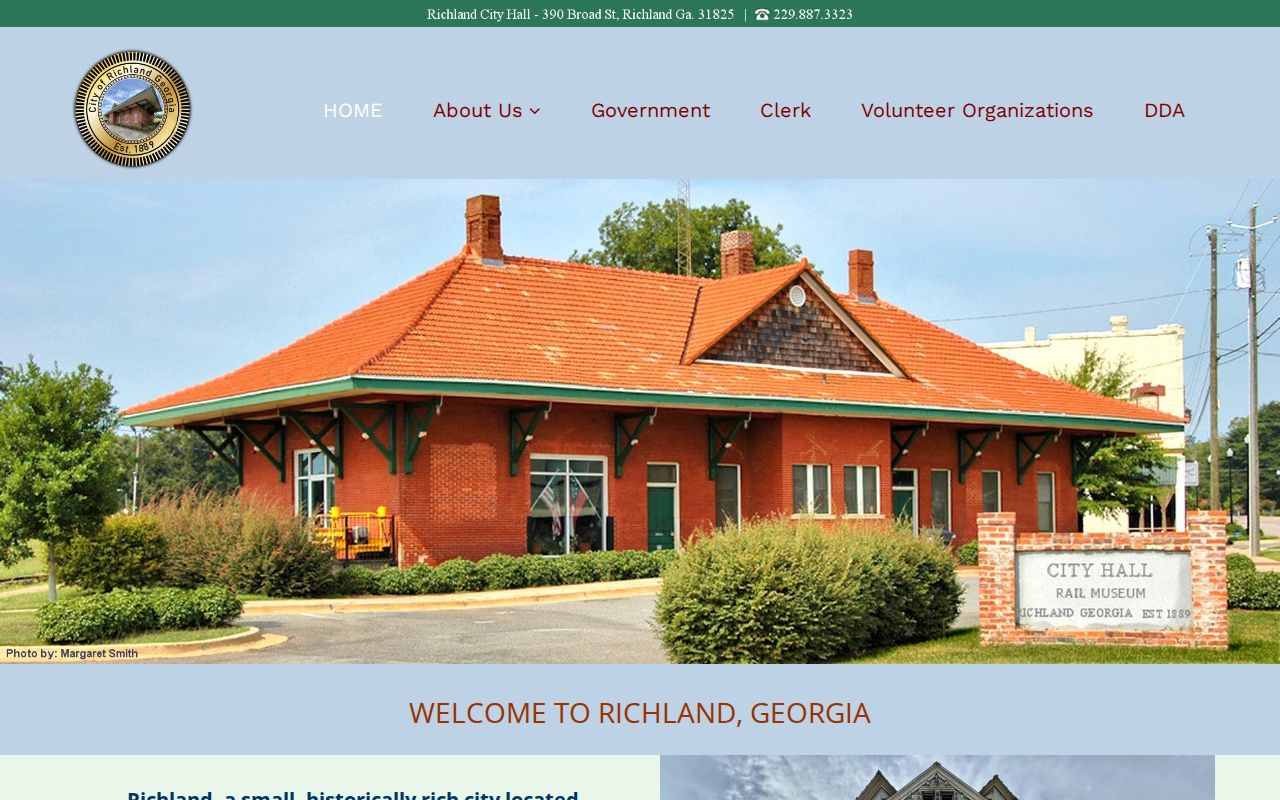
Use that gateway to confirm current city information, then call the specific custodian because the site does not promise a unified criminal-record lookup.
Where Richland Records Go
City records do not all rise to the same level. A municipal citation can stay in Richland. A custodial arrest can generate a Stewart County booking record. A felony filing becomes a Superior Court case, and the final disposition should be submitted to the Georgia Crime Information Center. The public Georgia Felon Search is narrower than the full state record because it reports qualifying public felony convictions, not every arrest or misdemeanor.
Record flow: Richland Police › Stewart County Courts › Georgia Crime Information Center
For an older completed matter, compare the city or county disposition with a personal GCIC review if accuracy is vital. For a recent event, do not expect the state result to replace the police narrative or current court docket. Each record answers a different question.
Richland Records on Broad Street
Richland began as Chisholm in 1827 and incorporated in 1889. Rail lines arrived and joined during the late 1880s, and the Americus Investment Company built the Richland Inn and many Broad Street storefronts during the 1889 boom. The city’s official history documents that growth.
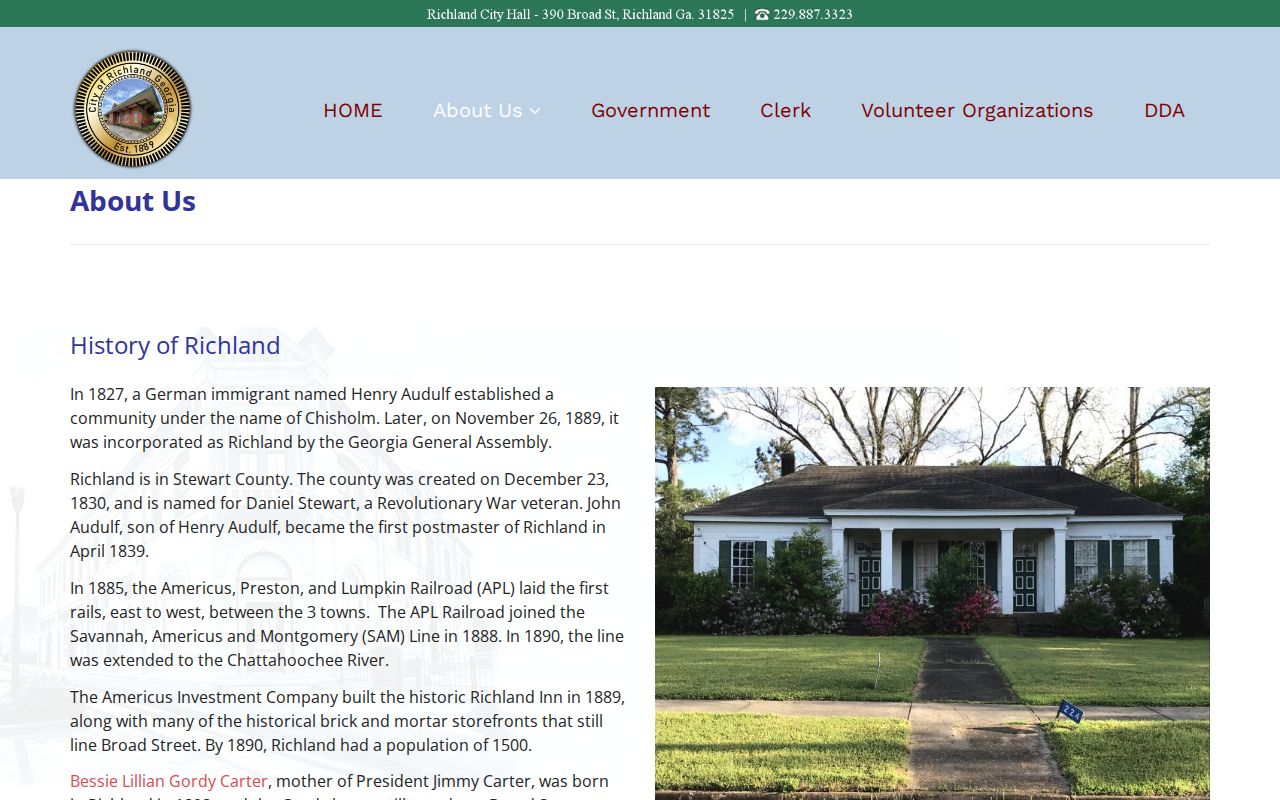
The same geography helps explain today’s record split. Richland City Hall and the clerk remain at 390 Broad Street, while felony court files are kept in the county seat at Lumpkin. Historical researchers should give a name, approximate year, court, and record type rather than assume every old paper has been indexed online.
Read Richland Crime Data Carefully
No verified Richland Police annual report or stable official city offense series was captured. Missing data must not be read as zero crime. Anyone using the FBI Crime Data Explorer or Georgia UCR data should label the reporting agency and year, then check whether all months were submitted. Stewart County totals cannot safely be presented as city totals.
The official 2020 Census count used in the Georgia DCA material places Richland at 1,370 residents. That figure gives population context, not a basis for inferring offense levels. Individual criminal records still require the agency and court routes described above.
Coverage checks matter in a small city. A blank result can mean that the agency did not report for the chosen period, that the search used the wrong agency label, or that the event belongs to a county or state officer. It can also mean no matching record was found. Only the source metadata and a direct agency check can separate those meanings.
Public Access Rules in Richland
The Georgia Open Records Act applies to releasable city police and municipal documents. An agency generally must respond within three business days or state the timetable, cost, or legal exemption. That duty does not make every part of a file public. Active-investigation material, juvenile records, sealed papers, protected personal data, and other exempt content may be withheld or redacted.
GCIC dissemination follows a separate rule. Georgia allows a public search for qualifying felony-conviction information using name, race, sex, and date of birth, but broader criminal-history information about another person generally calls for prescribed consent. A name match is not fingerprint identity, and an arrest must not be described as a conviction.
Key Statutes:
Georgia Open Records Act, O.C.G.A. §§50-18-70 through 50-18-77 - requires access to nonexempt agency records and a timely response.
O.C.G.A. §35-3-34 - sets the public felony-conviction route and consent rules for broader history.
O.C.G.A. §35-3-37 - governs restriction and qualifying conviction remedies.